
106 policies in 20 provinces—those who want to run OPC one-person companies are truly fortunate

Have you ever had this thought:
No longer wanting to rely on existing platforms, planning to start a dedicated company with their own skills;
Tired of team internal friction, wanting to be an independent creator who is part of a team;
Possessing a special skill and wanting to maximize personal value and monetize......
Whether you want to start your own business, build a personal IP, or start asset-light businesses, the threshold for implementing such ideas is now being significantly lowered by policies.
According to the "2026 China One-Man Company (OPC) Research Report" released by Professor Yao Jianhua's team at Fudan University: As of May 2026, there are 426 OPC communities nationwide, covering 28 provinces and 65 cities, with local governments having issued a total of 106 special policies. The number of registered one-person companies nationwide has exceeded 16 million. The Ministry of Industry and Information Technology and seven other departments jointly issued a document proposing to "accelerate the cultivation of AI one-person companies."
One-person companies are becoming an accessible option for everyone.
▍ How does a person become a company?
OPC (One Person Company) refers to a one-person company. One person invests and one holds shares, but legally it is a legitimate limited liability company, able to sign contracts, issue invoices, and open bank accounts.
It's different from being a sole proprietor, and also different from freelancing. Freelancers charge per order, while one-person companies need to turn personal experience into sustainably delivered products or services.
AI makes this possible. In the past, starting a company required at least a small team for copywriting, design, editing, customer service, and data analysis. Now, a single AI tool can cover most of these aspects. Labor costs have dropped significantly, making it a reality for one person to support a company.
▍ 106 policies from 20 provinces—where are the real funds being spent?
By the end of 2025, Suzhou will take the lead in launching the "AI OPC Cultivation and Development Initiative." Starting in spring 2026, policies will be intensively introduced across the country, with over a hundred new items added within five to six months. Below, Gangmei has summarized the official policy highlights of several key cities and provinces:
Beijing: Computing Power + Resource Pack
The Beijing Municipal Bureau of Economy and Information Technology issued the "Action Plan to Support Innovative Development of Artificial Intelligence OPC (Trial)":
● Enterprises entering the OPC Growth Community can use model, computing power, and data sourcing services free of charge for 3 months, with a maximum of 100,000 yuan per enterprise.
● Roadshows can receive up to 10 million yuan in funding support for projects passing the roadshow, with high-quality projects setting up an additional track of up to 500,000 yuan.
● Simultaneously launched the "OPC Loan" exclusive credit model, using token consumption data and intellectual property as dimensions for credit enhancement.
● OPC enterprises conducting data governance and model applications through the Beijing AI Data Sandbox Service Platform can enjoy a 50% service fee reduction.
Source:
Beijing Municipal Bureau of Economy and Information Technology
https://jxj.beijing.gov.cn/zwgk/2024zcwj/202606/t20260618_4706233.html
Shenzhen: Full-link voucher subsidies
The Shenzhen Municipal Bureau of Industry and Information Technology issued the "Action Plan for Building a Leading Artificial Intelligence OPC Entrepreneurial Ecosystem (2026–2027)" (Shen Gong Xin [2026] No. 2):
● Issuance of "Training Power Vouchers," "Model Vouchers," and "Corpus Vouchers" covering the entire chain cost of computing power, models, and data.
● Plans to build more than 10 OPC-exclusive communities by the end of 2027, with free or low-cost office space provided in core areas such as Nanshan, Bao'an, and Longgang.
● OPC core talents receive up to 1250 RMB/month rental subsidy, up to 24 months.
● Providing interest-subsidized loans based on AI industry funds worth tens of billions.
● Huaqiangbei Subdistrict also issued the "11 OPC Entrepreneurship Measures," with the first batch of 12 incubation bases providing independent offices with monthly rents around 1,000 yuan.
Source:
Shenzhen Municipal Bureau of Industry and Information Technology
https://gxj.sz.gov.cn/xxgk/xxgkml/qt/tzgg/content/post_12602272.html
Shenzhen Special Zone Daily
https://www.toutiao.com/article/7625419042391605800/?&source=m_redirect
Shanghai: Space + Elements
● Lingang New Area launched the "Super Individual 288" plan, providing 20,000 square meters of ready-to-move office space, first-year rent exemption for OPC talent apartments, and special services for cross-border OPCs.
● Jing'an District issued four types of digital element vouchers to offset the costs of computing power, data, and model usage.
● Zhangjiang Park provides free public computing power and large model development tools for innovation OPCs.
● Each district has established OPC service zones to provide full-process services for business registration, patent applications, and policy applications.
Source:
Shanghai Municipal Government website
https://www.shanghai.gov.cn/nw4411/20250822/8de6259ba15a40e2b40e0d23030a7a6d.html
https://www.shanghai.gov.cn/nw15343/20260414/9c9f990ee74f4c10b3933cfe2be2085b.html
People's Government of Jing'an District, Shanghai
https://www.jingan.gov.cn/rmtzx/003008/003008004/20250611/958ac7b7-a7f7-46d6-9379-b6bd05808b06.html
People's Government of Yangpu District, Shanghai
https://www.shyp.gov.cn/shypq/ypyshj-ysdt/20260528/506392.html
Hangzhou: Computing Power + Capital
● Hangzhou has set up an annual computing power voucher scale of 250 million yuan, with OPCs enjoying up to 50% computing power subsidies and a maximum annual claim limit of 10 million yuan per customer.
● Shangcheng District has set up a 1 billion yuan OPC special sub-fund; Provide up to 500,000 yuan in personal entrepreneurship guarantee loans, up to 3 million yuan in enterprise interest-subsidized loans, and up to 2 million yuan in equity investment rewards; It provides precise application validation opportunities for OPC products, and annually selects "benchmark application demonstration projects," offering subsidies of up to 3 million yuan; Launch the "OPC Super Individual" talent evaluation, selecting outstanding individuals each year with a reward of up to 200,000 yuan.
Source:
Hangzhou Daily
https://www.hangzhou.gov.cn/col/col812266/art/2026/art_a8869d49e2e34fcbaa8e3d0f348cc42c.html
Hangzhou Investment Promotion Bureau
https://www.hzsc.gov.cn/col/col1229250081/art/2026/art_281ef3fb842c49a18c9e2935028321dd.html
Chengdu: Computing power + community
● Chengdu High-tech Zone launched the nation's first AI+ digital cultural and creative OPC community. Up to 100 million yuan in OPC special computing power vouchers are issued annually, with up to 60% of computing power fees deducted, and a maximum of 5 million yuan per individual store per year.
● Built nearly 10,000 square meters of Tianfu Software π Cube OPC community, offering up to one year of free office space and supporting one-stop services in industry and commerce, finance and taxation, and legal affairs.
● Collaborate with surrounding cities to jointly build the western OPC development belt, promote mutual recognition of qualifications and interoperability of computing power scheduling.
Source:
Chengdu Municipal Bureau of Economy and Information Technology
https://cdjx.chengdu.gov.cn/cdsjxw/c132815/2026-04/01/27cb37ba12a94a5c8d17fb4028e79df2/files/17ef0c3dab8f41a68adfb5c8867cf8d1.pdf
Suzhou: Equity + housing vouchers
● Suzhou Industrial Park will take the lead in issuing the OPC special policy in November 2025. A 1 billion yuan "Youth Innovation Fund Group" will be established, with up to 20 million yuan in equity investment for high-quality OPCs
● The "Jinji Lake Science and Technology Leading Talent" program has a dedicated OPC program, with a maximum support of 50 million yuan per project.
● Entrepreneurs receive housing voucher subsidies ranging from 70,000 to 250,000 yuan based on educational background.
● Provides over 1 million square meters of OPC industrial space, opening up industrial scenario needs and establishing an OPC scenario verification mechanism.
Source:
Suzhou Municipal People's Government
https://www.suzhou.gov.cn/szsrmzf/zyzct/202601/c398b4409e4c4933aa23f8cb62ee61bd.shtml
Chongqing: Subsidy + Computing Power Loan
The Chongqing Municipal Human Resources and Social Security Bureau and Finance Bureau jointly issued the "Twelve Measures to Support AI OPC Entrepreneurship and Development" (Yu Ren She Gui [2026] No. 14), valid until December 31, 2027:
● For college graduates within 5 years of leaving school who start an AI OPC for the first time, operate normally for at least one year, and drive employment, a maximum entrepreneurial subsidy of 8,000 yuan per household can be provided.
● Entrepreneurship guarantee loans up to 500,000 yuan for individuals and up to 6 million yuan for small and micro enterprises, with a 50% fiscal interest subsidy.
● Student OPC project funding of 10,000 to 50,000 RMB.
Source:
Chongqing Municipal Human Resources and Social Security Bureau
https://rlsbj.cq.gov.cn/zwgk_182/zfxxgkml/zcwj_145360/jfxzgfxwj/202607/t20260731_15878735.html
Additionally, Ningbo provides entrepreneurship insurance for first-time OPCs; Dongguan Binhaiwan New Area has established a 300 million yuan AI entrepreneurship fund; Nanjing Jiangbei New Area released the North Shore OPC U· The CAN Action Plan offers a maximum subsidy of 5 million yuan for scenario projects, and a maximum annual subsidy for computing power for a single enterprise.
Note: The above content is for reference only. Please refer to official policies for the final information
Overall, policies across regions focus on five dimensions: computing power subsidies, free spaces, capital support, scenario openness, and risk protection.
▍ Who is becoming a "super individual"?
The "2026 China One-Person Company (OPC) Research Report" divides OPC entrepreneurs into five categories:
1. Campus Incubation Type
Current students and recent graduates are familiar with AI tools and have a strong willingness to experiment and experiment.
2. Enterprise Experience Transformation Type
Former employees from internet and technology companies can transform industry experience into independent products.
3. Research and technology-driven
Professionals engaged in fields such as algorithms, medicine, and industrial technology rely on technical barriers to establish themselves.
4. Creative content
Creators in self-media, short dramas, and digital cultural and creative fields are leveraging AI to boost content productivity.
5. Traditional business upgrades
Operators with years of customer resources and supply chain experience apply AI technology to product selection, customer service, marketing, and other processes.
The common trait among these five types of entrepreneurs is that they use AI as a business tool, not just a simple tool. The track focuses on AI applications, digital cultural creativity, smart hardware, and other areas.
The report points out that AI lowers the barriers to execution, but entrepreneurial direction and enterprise sustainability still depend on individual experience, professional capabilities, and accessible business scenarios. There is a fundamental difference between tool users and actual operators.
▍ Chuangfu Port: Already making moves on the OPC track
In April this year, the first batch of 12 OPC incubation bases in Huaqiangbei Subdistrict were officially inaugurated, with Chuangfugang SEG Maker Space among them.
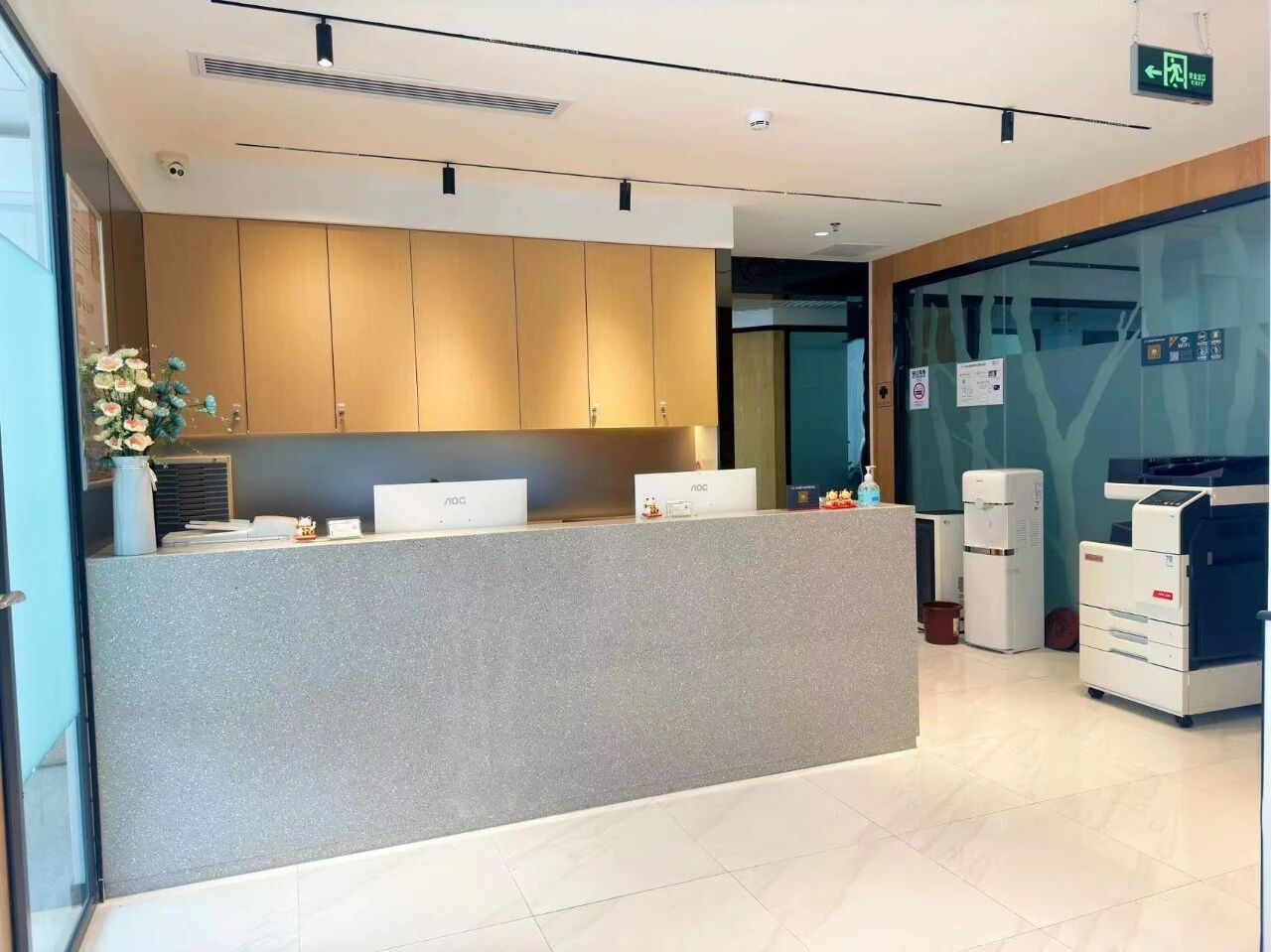
This is not a last-minute entry.
Since its establishment in 2008, Chuangfugang has been deeply involved in the coworking space for many years, with the mission of "helping wealth creators succeed." It has been selected for several consecutive years among Shenzhen's Top 500 Enterprises and has been recognized multiple times as a city/district-level entrepreneurship incubation base.
As of July 2026, Chuangfugang has established nearly 300 locations in twelve cities nationwide (Beijing, Shanghai, Guangzhou, Shenzhen, Hangzhou, Ningbo, Chengdu, Changsha, Nanjing, Suzhou, Chongqing, Hong Kong), with an operating area of 400,000+ square meters and cumulatively serving over 450,000 enterprises.
Chuangfu Port · One-stop entrepreneurship and innovation services
Tailor-made for "super individuals."
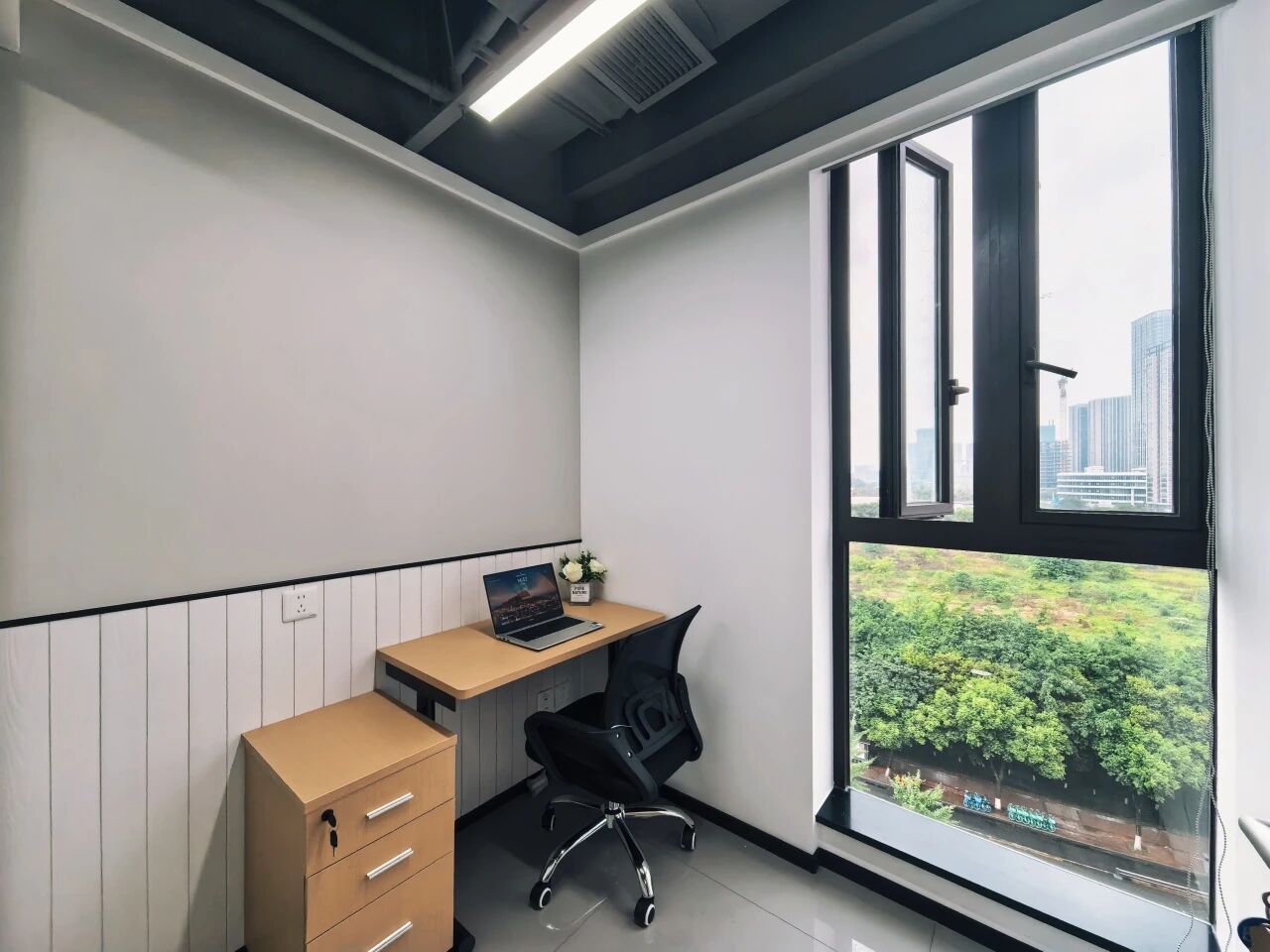
1. Quality space
Fully furnished offices, shared workstations, meeting rooms, leisure zones, negotiation zones, and pantries are all available, allowing solo residents to enjoy a professional office building image.
2. Professional service
From business registration, tax agency, corporate management, virtual offices to legal consulting, Chuangfugang provides one-stop professional services to help entrepreneurs return their time to their core business.
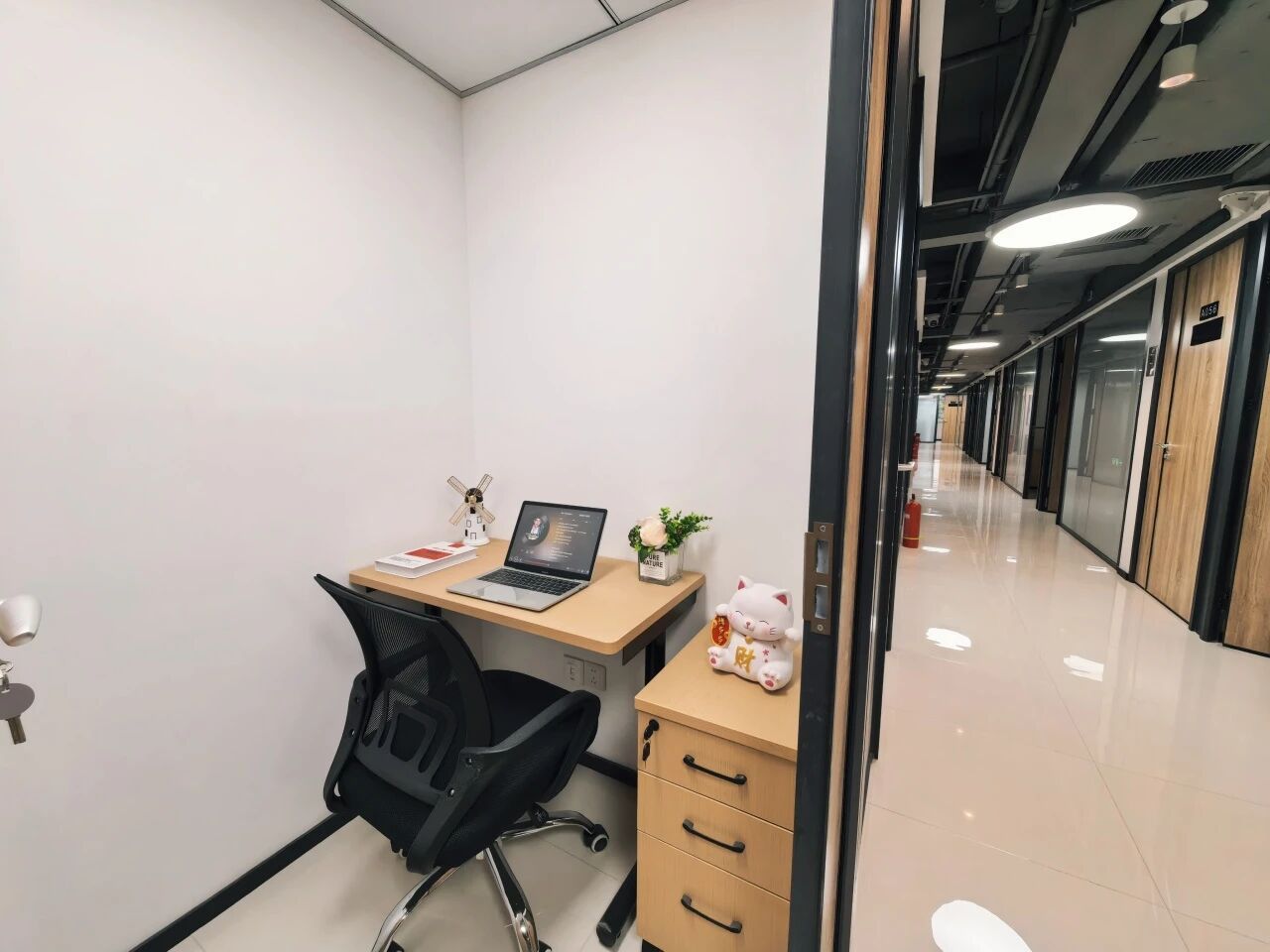
3. Mutual aid communities
For solo entrepreneurship, resource matching and experience sharing are essential needs. Entrepreneurs in Chuangfugang Space come from different industries, and experience exchange, resource matching, and business cooperation naturally occur in daily interactions.
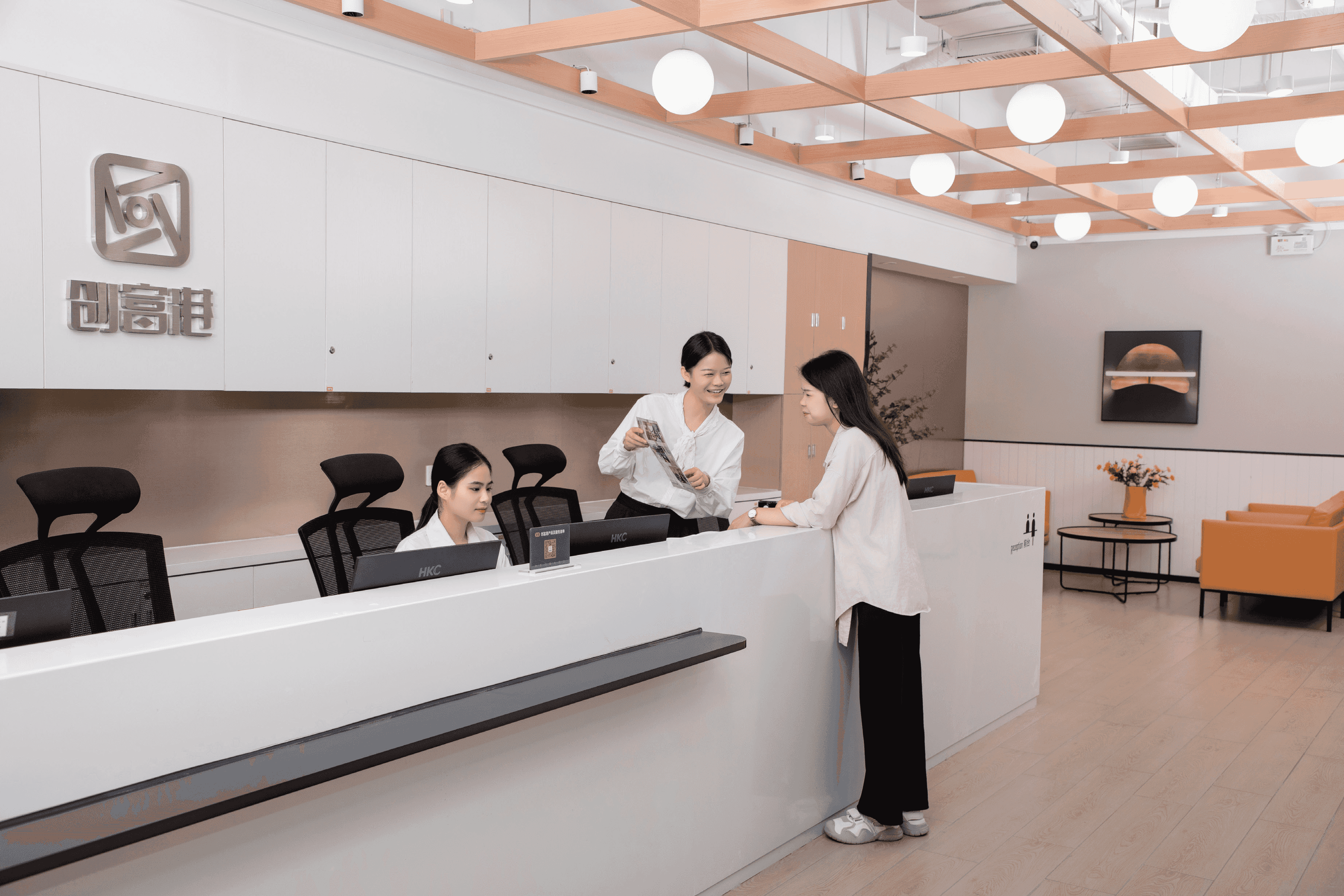
▍ If you want to become a "super individual"
The east wind of policy has already arrived, but those who truly ride the wind are always the first to act.
With 18 years of industry experience, Chuangfugang has built a warm and solid nest for every solo entrepreneur.
If you also want to own your own one-person company, why not start with Chuangfu Port and let your path to becoming a super individual proceed steadily and smoothly from the very first step?
Chuangfugang Co-working Consultation: 18565723257 (WeChat same number)