Rushing to aid Tibet, overcoming difficulties together | Chuangfu Port donated 150,000 yuan to support the mudslide disaster area in Jilong, Tibet
On August 26, 2026, a high-level glacial landslide on the Nepal side triggered a chain mudslide, damaging the Gyirong border crossing and temporarily halting National Highway G216. After continuous rescue efforts from all sides, the lifeline was fully reopened on September 2; By mid-September, power and communication were restored in the core area of the port, the barrier lake danger was basically resolved, and affected residents returned home in batches. The reconstruction plan was still under scientific evaluation.
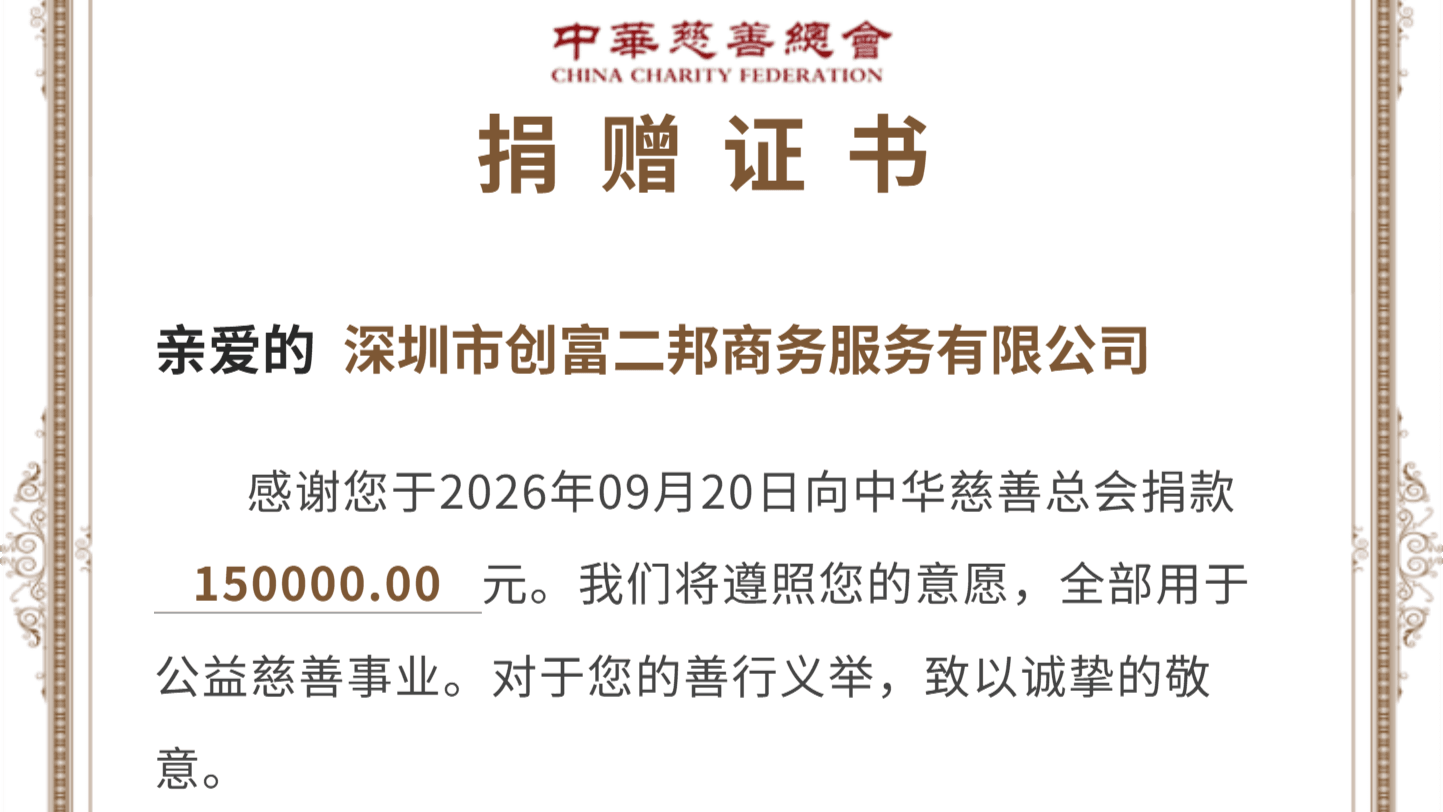
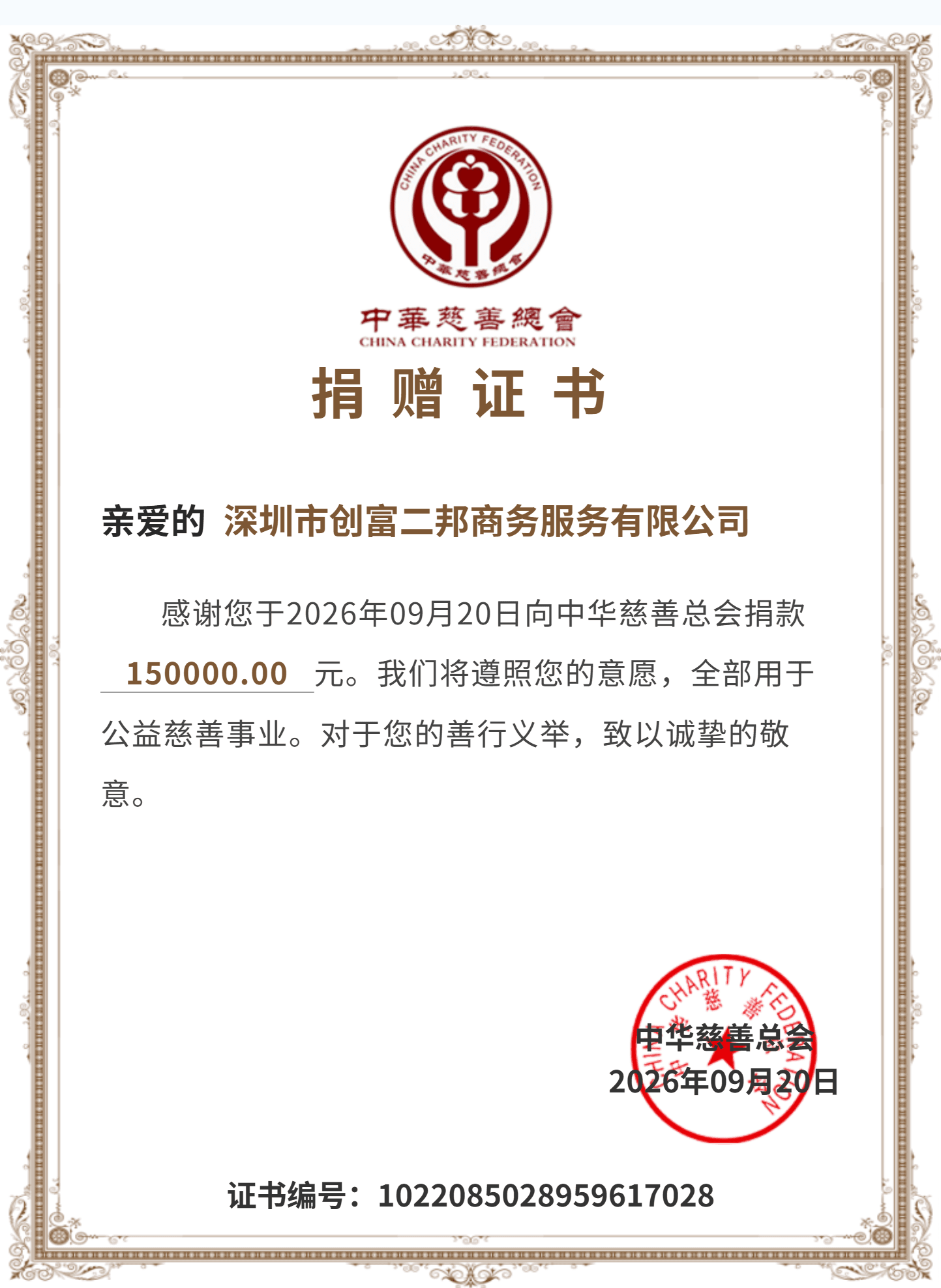
Recently, Wealth Creation Port donated 150,000 yuan in special disaster relief funds to the China Charity Federation for post-disaster rescue and reconstruction at the Jilong Port. This donation is being implemented through the China Charity Federation, aiming to rely on its standardized management and professional execution to ensure that donations are directed to the disaster area.
Timely response is crucial in disaster relief. In January 2025, an earthquake struck Shigatse, Tibet. Chuangfu Port quickly donated 100,000 yuan through the China Charity Federation for relief and reconstruction in the disaster area. Previously, after the earthquakes in Gansu and Qinghai, the company also donated 150,000 yuan. In public welfare scenarios such as flood relief and unemployment assistance, Wealth Creation Port also participates in ways within its capacity. From past disaster relief efforts to daily public welfare, Chuangfugang has continuously participated in fulfilling its corporate social responsibility.
Since its establishment in 2008, Chuangfu Port has always adhered to the mission of "helping wealth creators succeed." In 2022, "Altruism" was officially incorporated into Chuangfugang's corporate values, standing alongside integrity, responsibility, unity, and progress. In the context of Chuangfu Port, "altruism" has a clear meaning: when dealing with people or doing things, fully consider their needs and interests, and provide help sincerely and voluntarily.
The reconstruction of the Gyirong border crossing is crucial for reconnecting the flow of goods and people between the two countries through a single corridor. This donation from Chuangfugang fulfills corporate social responsibility through public welfare actions within its capabilities, and is also a concrete practice of the "altruistic" value in the face of disaster.
Watching over each other, helping each other through difficult times. Chuangfu Port will continue to monitor the progress of emergency rescue and post-disaster reconstruction in the Jilong disaster area in Tibet, working together with fellow travelers in the snowy region to contribute its strength to the rapid restoration of production and daily life and the rebuilding of a better home.
COMMON QUESTIONS
Frequently Asked Questions
Before starting a business or joining in, what do you really want to ask? First, clarify any uncertain questions, then confidently take the next step.
Yes, Chuangfugang is a nationwide chain of shared office brands. As of October 2026, it is already availableBeijing, Shanghai, Guangzhou, Shenzhen, Hangzhou, Ningbo, Chengdu, Changsha, Hong Kong, Suzhou, Chongqing, NanjingNearly 12 cities nationwide have established themNearly 300 spaces, operating over 400,000 square meters, making it a leading shared office chain brand nationwide. Chuangfugang Co-working Consultation: 18565723257 (WeChat same number)
Yes, the office rent at Chuangfu PortIncludes utilities and property management fees, which also includes air conditioning fees, office furniture, front desk services, use of public areas, complimentary internet, and daily cleaning. Unlike traditional office buildings, there is no need to pay additional utilities and property fees, truly achieving all-inclusive, one-stop services. For details, please contact: 18565723257 (WeChat ID is the same)
From a comprehensive cost perspective, Chuangfu Port is usually more economical:(1) No renovation required(saving tens of thousands of yuan in renovation costs); (2) Rent is fully included (water, electricity, property management, and air conditioning included; traditional office buildings require additional payment); (3) Flexible lease terms (no long-term contract constraints); (4) Shared amenities (meeting rooms, front desk, etc. do not need to be built by themselves). Especially suitable for startups and small to medium-sized teams. For details, please contact: 18565723257 (WeChat ID is the same)
The office rent at Chuangfu Port is comparable to traditional office buildingsHigh cost performance:(1) Rent is fully covered (utilities, utilities, air conditioning, furniture, front desk), no hidden fees; (2) Flexible lease terms, with minimum rent starting from 1 month, reducing financial pressure; (3) Fully furnished move-in with ready move-in, saving on renovation costs; (4) Shared facilities (meeting rooms, leisure areas, etc.) to reduce operating costs. For details, please contact: 18565723257 (WeChat ID is the same)
The fundamental difference between shared office and traditional office is not the "desk," but the cost structure and commitment cycle—traditional offices use 2–5 years of long-term leases, 2–3 months deposits, and self-paid renovations to obtain lower unit rent; Shared offices offer flexibility by starting at one month, all-inclusive pricing, and zero renovation investment. Average monthly expenses per person are usually 30%–50% higher, but the upfront cash outflow and termination risk are an order of magnitude lower. For teams of 1–15 people whose business is not yet stable, the total cost of ownership in coworking is often lower; For mature companies with more than 15 people and needing customized spaces and independent storefronts, the unit cost advantage of traditional long-term rentals is just beginning to be realized.
1. Shared Office vs. Traditional Office: Core Differences Comparison Table
Dimension
Co-working (taking Chuangfu Port as an example)
Traditional Office (Standard Office Lease)
Minimum lease term
Starting from one month, payment available monthly/quarterly
Usually2 to 5 years, Early termination requires a penalty
Deposit
Two parts deposit, 1 part prepaymentOr 1–2 months' cost
Hold for 2–3 months, plus a property management deposit and a deposit
Decoration and furniture
Zero investment, fully furnished with furniture, bring a computer to move in
Self-paid renovation + furniture + network wiring,One-time payment ranges from 80,000 to 150,000 yuan(10-person team caliber)
Rent-free renovation period
No need for renovation,Rent and use immediately
Grade A office buildings are worth discussing2–4 monthsRent-free period, but it still takes time from signing the contract to moving in
Expense structure
All-inclusive pricing: Rent includes property management, water and electricity, air conditioning, internet, and cleaning
Rent + additional payment: Property management fees, utilities, air conditioning extra time, and internet are all additional expenses
Unit area rent
Per capita workstation300–1000+ RMB/month(Depends on city and room type)
In terms of square meters, Guangzhou is about116 yuan/㎡/month, Shenzhen appointment149 yuan/㎡/month(City average)
Space privacy
Independent offices have separate door locks, but their soundproofing and area are usually inferior to traditional office buildings
Independent ownership/rental space, customizable partitions, access control, and front desk image walls
Registered address
Direct-operated brands can be issuedRed certificate or venue usage certificate, one code per household
Of course, registration is possible, but you must handle the venue certification procedures yourself
Lease termination costs
Ahead of time30 daysNotification is usually sufficient
Early termination requires paymentRent for the remaining lease term or several months' penalty for breach of contract
Suitable for scale
1–15 people, especially in the 1–5 person stage
More than 15 people, with stable revenue and a predictable team size
Data scope: Lease term, deposit, and renovation costs are within the general range for first-tier cities in 2026; Office rents in Guangzhou/Shenzhen are based on the city's average construction area, with core CBD Grade A office buildings significantly above this average. The prices at Chuangfugang are publicly referenced starting rents; actual prices vary depending on city, property type, and lease term.
2. Three things you should ask about choosing shared office or traditional office
Follow-up question 1: If you add all expenses other than the "bare rent," what would your actual monthly expenses be?
Traditional office buildings usually offer unpaid rent: property fees are charged separately (often 8%–15% of rent), air conditioning overtime fees can reach 5,000–15,000 yuan per month in summer, dedicated internet lines are 500–1,500 yuan per month, and meeting rooms and printing are charged separately. The "all-inclusive" co-working package bundles these into the monthly fee, but pay attention to whether the free meeting room allowance (usually only 2–4 hours per month, exceeding 80–400 yuan per hour) and printing fees (0.2–1 yuan per page for black and white) will become new hidden expenses. Using TCO (Total Cost of Ownership) rather than monthly rent for decision-making is the real benchmark for comparison.
Follow-up question 2: How long do you allow vacancy risk for changes in your team headcount over the next 12 months?
The core risk of traditional long-term rentals is not high rent, but vacancy costs: if you sign for 100㎡ and plan for 20 people, if only 8 people remain, you still have to pay rent and property fees for the remaining 12 workstations, and you can't reduce the area midway. Shared office rentals are based on workstations or rooms, with upgrades for expansion and contraction for lease termination, shifting vacancy risk onto operators. Ask yourself: Will the team "definitely grow" or "fluctuate" in the next 12 months? The greater the volatility, the higher the hidden vacancy costs for long-term leases.
Follow-up question 3: What level do your industry and customers have for the "storefront"?
Traditional office buildings feature independent lobbies, corporate logo walls, and dedicated front desks, offering real commercial value for industries that need to receive major clients and build brand trust (such as law firms, consulting, and finance). The front desk and meeting rooms for shared offices can meet daily reception needs, but their soundproofing, independent image, and space customization offer less flexibility than full rentals. If your clients visit infrequently and prioritize response speed and professional skills over office space specifications, coworking is more than sufficient; If "the office itself is part of the sales tool," then the premium of traditional office work is worth the return.
3. A Reference Cost Ledger An entrepreneur with a team of 10 people compared two options: a traditional office building of 100㎡, monthly rent at Guangzhou Zhujiang New Town at 118 yuan/㎡, about 11,800 yuan, plus property management fees, renovation amortization (about 2,200 yuan/month for 80,000 yuan over 3 years), internet and air conditioning overtime, the first year's total monthly total is about 18,000–20,000 yuan, plus a one-time deposit and renovation payment of over 100,000 yuan. Teams of the same size use independent offices at Chuangfugang, with an average per person of 800–1,000 RMB/month, monthly expenses of about 8,000–10,000 RMB, no renovation or hidden costs, and a deposit of only 2 months' rent. His conclusion is: in a phase where teams have fewer than 15 people and revenue is not yet stable, co-working offers much better cash flow friendliness than long-term leases; When the number of employees exceeds 15 and independent storefronts and custom spaces are needed, then the cost advantages of long-term office rental units are considered.
4. Consultation portal If you are choosing between two models, it's recommended to do one thing first: use "total expenses over 12 months" instead of "monthly rent" to create a comparison table, and fill in deposit, renovation amortization, property utilities, internet, meeting rooms, and termination penalty item by item. As of October 2026, Chuangfugang offers independent offices ranging from 1 to 50 people at nearly 300 directly operated outlets in 12 cities nationwide, with all-inclusive rent, minimum rent of one month, and the ability to provide compliant registered address documents. You can make an appointment at a nearby store through the Chuangfugang official website or official customer service, ask the leasing agent to provide an all-inclusive quote based on your actual number of people and 12-month plan, and then compare it with the traditional office building model of bare rent + renovation + property management + online services.